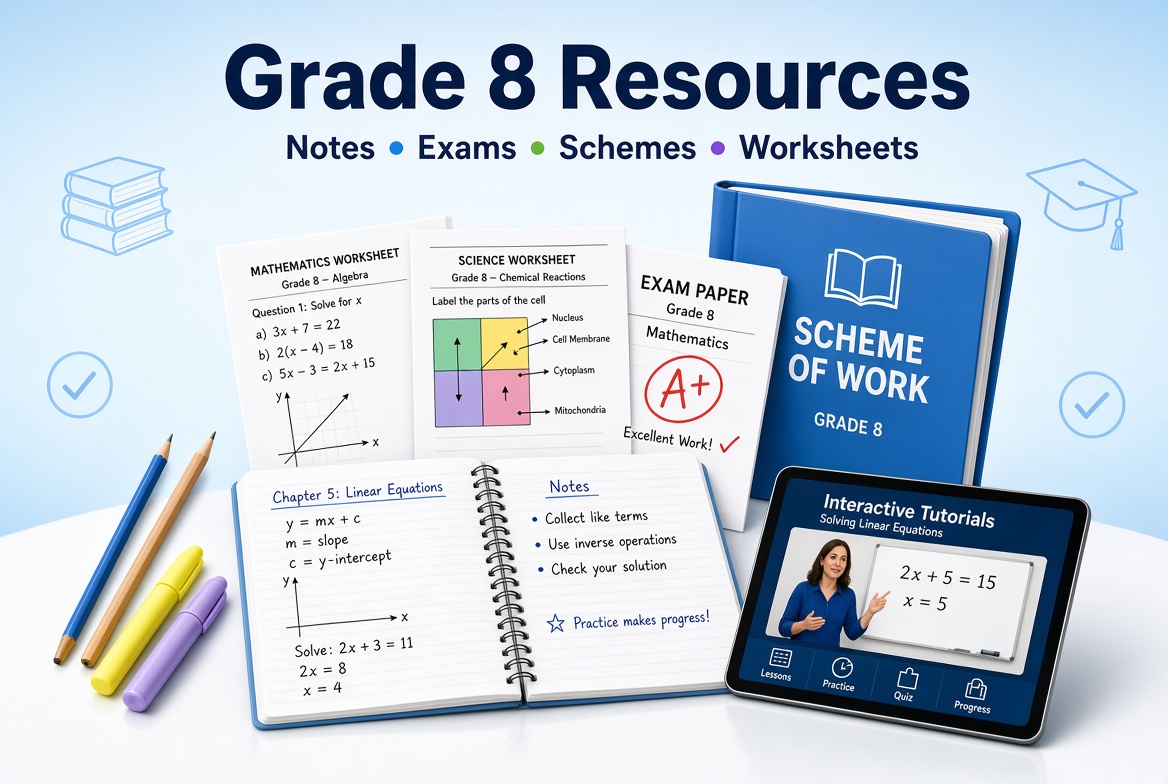
Description
What’s Included in This Bundle?
| Strand | Sub-Strands Covered | Weeks |
|---|---|---|
| Human Rights | Polite Language (Telephone Etiquette), Extensive Reading (Independent Reading), Grammar (Compound Nouns) | Weeks 1-2 |
| Scientific Innovations | Oral Presentations (Songs), Intensive Reading (Poetry), Grammar (Collective Nouns), Writing (Legibility) | Weeks 3-4 |
| Pollution | Listening Comprehension, Intensive Reading, Grammar (Primary Auxiliaries), Poetry, Writing (Punctuation) | Weeks 5-6 |
| Consumer Roles & Responsibilities | Selective Listening, Intensive Reading, Grammar (Verbs & Tense), Writing (Paragraphing) | Weeks 7-8 |
| Relationships: Peers | Pronunciation, Study Skills (Reference Materials), Grammar (Adjectives), Intensive Reading (Short Story) | Week 9 |
| Rehabilitation | Conversational Skills (Disagreeing Politely), Reading Fluency (Poem), Grammar (Adverbs), Writing (Apology Letters) | Week 10 |
| Natural Resources: Wildlife | Listening for Detail, Intensive Reading (Visuals), Grammar (Pronouns), Intensive Reading (Short Story), Writing (Composition) | Week 11 |
| Consumer Protection | Extensive Listening (Poems), Intensive Reading (Comprehension Strategies), Grammar (Compound Sentences), Short Story (Style) | Week 12 |
| Modern Fashion | Listening to Respond (Attitude), Intensive Reading (Comprehension Strategies), Grammar (Phrasal Verbs), Short Story (Characters) | Week 13 |
| Tourism: Domestic | Listening and Responding (Myths), Intensive Reading (Poem), Grammar (Simple Prepositions), Writing (Descriptive Writing) | Week 13 |
| Heroes and Heroines: Africa | Pronunciation (Vowels/Consonants), Extensive Reading (Fiction), Grammar (Conjunctions), Intensive Reading (Similes/Metaphors) | Week 13 |
| Choosing a Career | Conversational Skills (Interviews), Extensive Reading (Non-fiction), Grammar (Adverbs), Intensive Reading (Lessons Learnt) | Week 13 |
What’s Inside Each Week?
📋 Week 1: Human Rights
Sub-Strands:
Polite Language: Telephone Etiquette – Identify polite words and phrases, role-play telephone dialogues
Extensive Reading: Independent Reading – Identify print and non-print texts, read for information
Grammar: Compound Nouns – Identify, categorize, and form compound nouns
Key Inquiry Questions:
Why should one be polite when speaking over the telephone?
Why should one read widely?
Why should we use compound nouns when communicating?
🔬 Week 3: Scientific Innovations
Sub-Strands:
Oral Presentations: Songs – Identify features of songs, use performance techniques
Intensive Reading: Simple Poems – Identify persona, discuss voice, explain meaning
Grammar: Collective Nouns – Identify, classify, and use collective nouns
Key Inquiry Questions:
What makes a song more interesting?
How is a poem different from a passage?
What are the different types of nouns?
🌍 Week 5: Pollution
Sub-Strands:
Listening Comprehension – Identify main ideas, respond to oral questions
Intensive Reading – Answer questions, infer meanings
Grammar: Primary Auxiliaries – Identify and explain functions of primary auxiliary verbs
Key Inquiry Questions:
Why is it important to listen keenly?
How can one improve the way they read?
Which words describe actions and which ones describe state?
💬 Week 7: Consumer Roles & Responsibilities
Sub-Strands:
Selective Listening – Distinguish between specific and general information
Intensive Reading – Identify reading strategies, select main ideas and details
Grammar: Verbs and Tense – Identify verbs in simple present and simple past tense
Key Inquiry Questions:
Why is it important to get the main points from an oral text?
Why should one read for main ideas?
Which words would you use to describe something that you did yesterday?
👥 Week 9: Relationships: Peers
Sub-Strands:
Pronunciation – Identify and pronounce words with sounds /ɒ/, /ɔː/, /θ/, /ð/
Study Skills: Reference Materials – Select and use reference materials
Grammar: Adjectives – Identify and use gradable and non-gradable adjectives
Intensive Reading: Short Story – Identify dialogue and repetition
Key Inquiry Questions:
Why are some words in a sentence pronounced with greater force than others?
What is the importance of reference materials?
Which words describe nouns?
What types of stories are interesting to read?
📝 Week 10: Rehabilitation
Sub-Strands:
Conversational Skills: Disagreeing Politely – List ways of disagreeing politely, use conversational strategies
Reading Fluency: Poem – Identify techniques of reading fast, preview and skim
Grammar: Adverbs – Identify adverbs of frequency and degree
Writing: Apology Letters – List parts of a letter of apology
Key Inquiry Questions:
Which words or phrases are used to show politeness?
Why should we display appropriate expressions when reading a text?
Why should one use adverbs correctly?
Why do people write letters?
📖 Week 13: Choosing a Career
Sub-Strands:
Conversational Skills: Interviews – Identify polite words and expressions, use polite words
Extensive Reading: Non-fiction – Identify print and non-print materials
Grammar: Adverbs – Identify adverbs formed from adjectives
Intensive Reading: Lessons Learnt – Identify lessons learnt in a short story
Key Inquiry Questions:
Why is it important to use polite language during an interview?
What is the importance of reading widely?
Why do we form words from other words?
What issues in the society are addressed by stories?



Reviews
There are no reviews yet.